Here is a playful way of listing words and noticing how they are formed. Make a list of words and phrases in which the last section of each becomes the first part of the following word or phrase. It could be that there are whole words within compound words: pigtail - tail end - endpaper - paper … Continue reading Word Chain
Land Words
Words are endlessly fascinating. Naming is so interesting and important. I read recently about a book by John McPhee, The Crofter and the Land. McPhee visited the Hebridean island of Colonsay where his family originated. He discovered that every beach, gully, cliff and rise of land has a name. On a tiny island of only 138 … Continue reading Land Words
Stories they tell
Today, we offer just a quick idea: a different point of view. Try writing a story from the point of view of one of your pets. If you don’t have a pet, then you can imagine one. In fact, if you don’t have a pet, you can imagine any animal you like. Our pets know … Continue reading Stories they tell
Flip book
Make yourself a little flip book and create hundreds of different characters. A small flip book can generate lots of variations on a theme and plenty of laughter. Take a sheet of A4 paper and cut it into four quarters. Fold each small sheet and slot the sheets together to make a small book. Secure the … Continue reading Flip book
Another kind of list
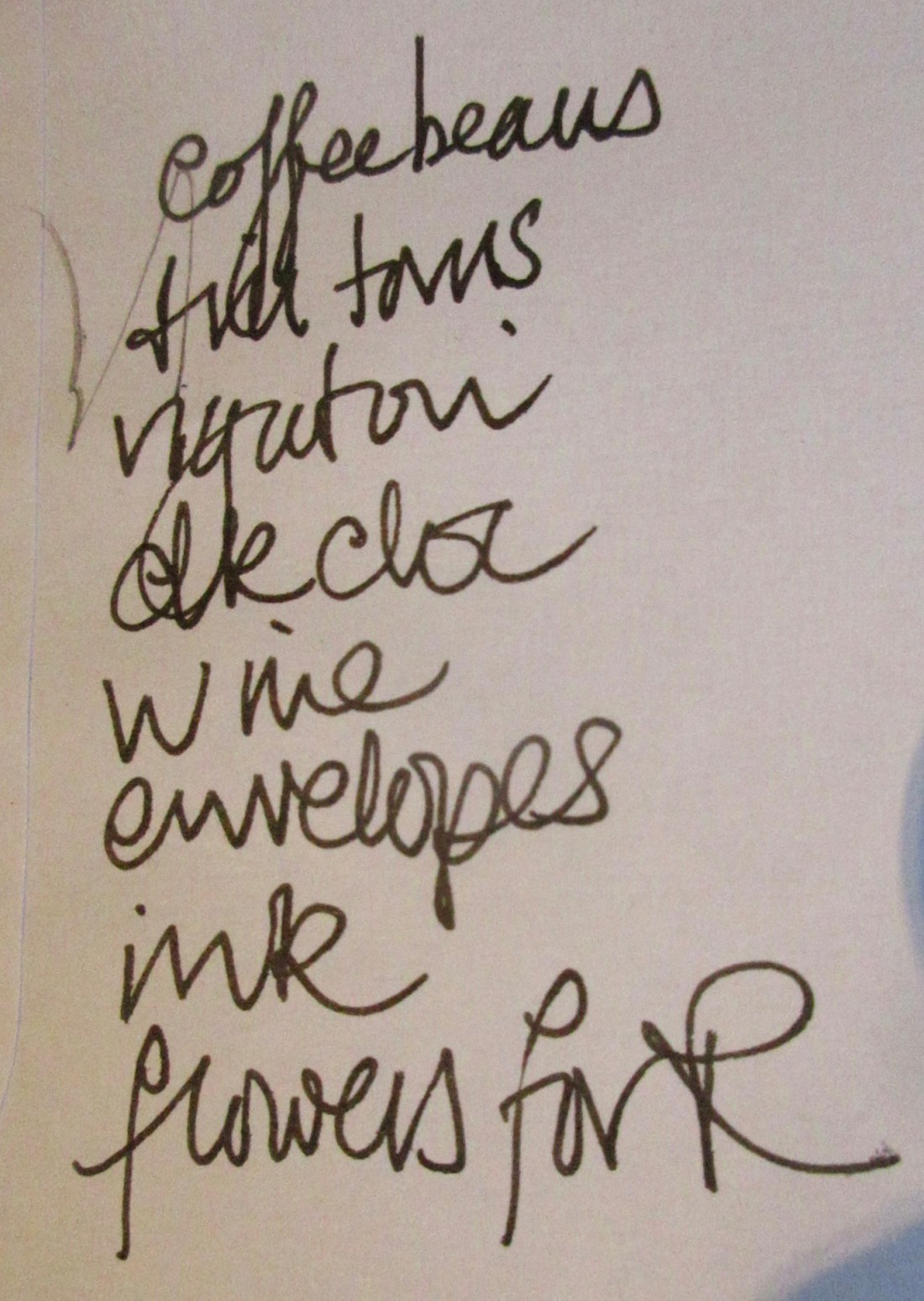
We’re back to lists today and we are thinking about characters at the same time. Ann Berthoff writes: ‘Lists are composed; they don’t just happen.’ Composing a list involves organising names and sometimes actions according to some purpose. The act of list writing can even be a way of discovering purpose. One thing can lead … Continue reading Another kind of list
Colour chart
In our last post, we wrote about colour comparisons. Today, we are going to make up names for colours. It is a similar activity. Think about a paint chart, or the names for lipstick colours or the colours of cars. We make up all kinds of phrases to suggest a colour: strawberry blush; dead salmon; … Continue reading Colour chart
White as …
Colour – or lack of it – can be hard to describe. What colour was it? we ask. ‘Blue,’ we are told. But that could mean a blue, pale as forget-me-nots or a blue so dark that you might think it was black. The blue compared with forget-me-nots, might make us think of spring, of … Continue reading White as …
Here’s one I made earlier
We are often encouraged to model a piece of writing; to show students how to write in a particular way. We should, indeed, act as role models for our students. And we learn from watching others at work. There’s the hitch. Writing is a messy and unpredictable thing. We often worry about our students spotting … Continue reading Here’s one I made earlier
Don’t!
In the nineteenth century, women were allowed to go out cycling. It became a popular pastime. It wasn’t all plain sailing, though. Women were expected to behave themselves and certainly not act in an unladylike way. . The New Times published a list of ‘Don’ts for women riders’. Here are some examples from the list: Don’t … Continue reading Don’t!
The Pedagogy of Listening
The Pedagogy of Listening. The Listening Perspective from Reggio Emilia.I would like to draw your attention to this article written by Carlina Rinaldi and found here: https://static1.squarespace.com/static/526fe9aee4b0c53fa3c845e0/t/540fce31e4b00c94d884e002/1410321969279/Pedagody+of+Listening+-+Rinaldi+-+Fall+2001.pdf Carlina Rinaldi conceives school as a place that can play an active role in our search for meaning; where both adults and children seek individual and shared meanings; … Continue reading The Pedagogy of Listening