
Here’s a way of looking closely and writing poems, as a group, in pairs or alone. We were prompted to write about it now, because pumpkins are such a good subject for this approach. However, there are all kinds of fruit and vegetables which work well.

The idea is fairly simple. Start with a fruit or vegetable and describe its outside appearance. A pumpkin does work well because of its size and because of the surprising jewels within. Prepare strips of paper before you start, so that you can write everyone’s line as they say it.
Pass the pumpkin around the group. Ask each person to say something about it. Think about weight, the feel of it, the shape of it. Look closely at the variation of colour, any patterns you can see, any blemishes or cracks; its stalk, its skin. Prompt writers to clarify, give a little more detail. If they say ‘orange’, perhaps search it little further to think about what kind of orange – like marigolds, or a burning flame, or your auntie’s velvet curtains. What does it remind them of. Sometimes it is worth asking more abstract questions: – if the pumpkin could speak, what would it say? What does it dream of? What song does it sing?
Write each idea on a separate strip of paper. Check with the author that you have the right words down. Collect the strips into a pile and set them aside.


Now comes a moment of drama [if you like a bit of drama!]. Cut the pumpkin in half along the horizontal. Wit to reveal its interior and, if possible, make sure that all the writers can see. Then lift the two halves apart. A pumpkin is particularly spectacular because of its colour, its packs of seeds caught in a cobweb of pith, and the way that water oozes from its flesh like sparkling gemstones.
Now repeat the first activity, looking at the inside of the pumpkin. What do they see? what does it remind them of? shapes, textures, and, often, smell. Write each line on a separate paper strip.
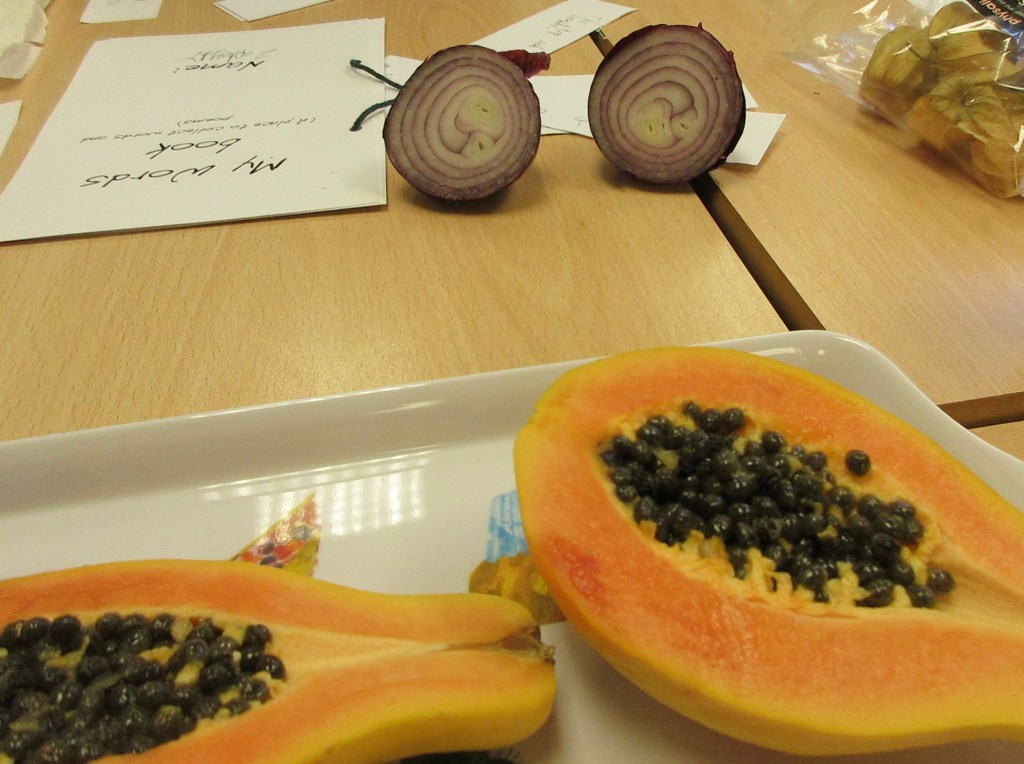


Now you can make a poems using the strips. You can work together or alone to arrange and rearrange the lines until you are happy with the outcome. You can make a whole class poem. You can divide the strips between smaller groups or pars, you can invite writers to work alone. They may want some blank strips if they want to add other ideas. The great thing is that they can try out different orders, line lengths and shapes before they finally glue the lines down or photograph them.

Lots of fruits work well, especially those filled with seeds like the passion fruit or dragon fruit. But apples, also, are magic. They contain a tiny star, or a person, depending on how you see it, and vegetables like cabbage and red onion, hold their own surprises.
 Writing Box